 Insight
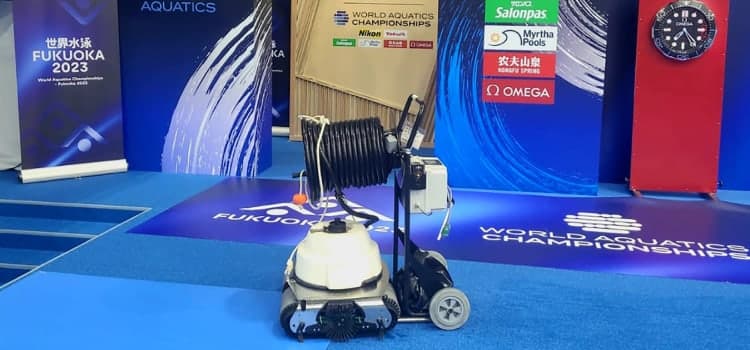
Fukuoka, Doha, Paris: the pools the world watches
The 2023 World Aquatics Championships, the Doha Worlds, the Paris 2024 Games — and, before them, Rio and London. What you learn cleaning pools under that kind of scrutiny.

Insight
Droughts and heavy rainfall are shortening the windows in which groundstaff can work. Interviewed by Terrains de sports, Hexagone argues for maintenance driven by the state of the soil rather than by the calendar.
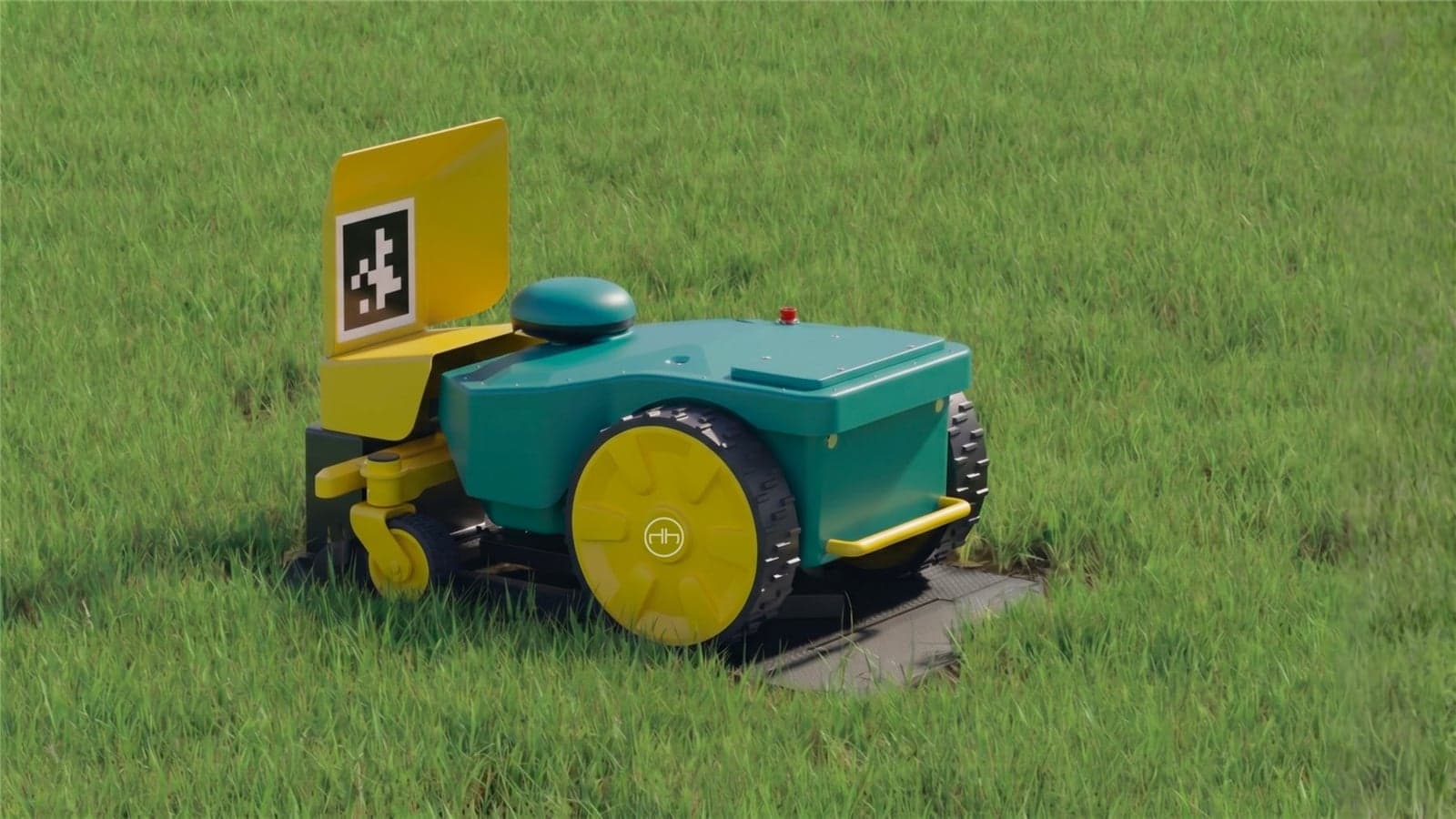
Alternating long droughts and intense rainfall does not change the nature of mechanical operations. It changes the number of days on which they can be carried out.
A soil that goes from hard to saturated within a few weeks imposes two contradictory demands: hold water when it is scarce, drain it when it arrives all at once. Between the two, the windows in which the pitch carries weight and the turf can recover grow shorter, and shift from one year to the next.
The maintenance calendar can therefore no longer decide on its own. It remains useful for planning orders, seed and pitch availability, but on the day it is the state of the soil that settles the matter: moisture at root level, percolation rate, rooting depth, the position of compacted horizons.
"Every surface has its own characteristics: soil type, drainage, exposure, usage, grass variety. There is no universal maintenance frequency," says Léo Chouraqui, director of Hexagone Sport Robotics.
Working at the wrong moment costs more than not working at all. On ground that is too dry, you add stress to turf that has nothing left to recover with. On saturated ground, you deform the playing surface and close up what you set out to open. The rule does not move: light and frequent beats heavy and late.
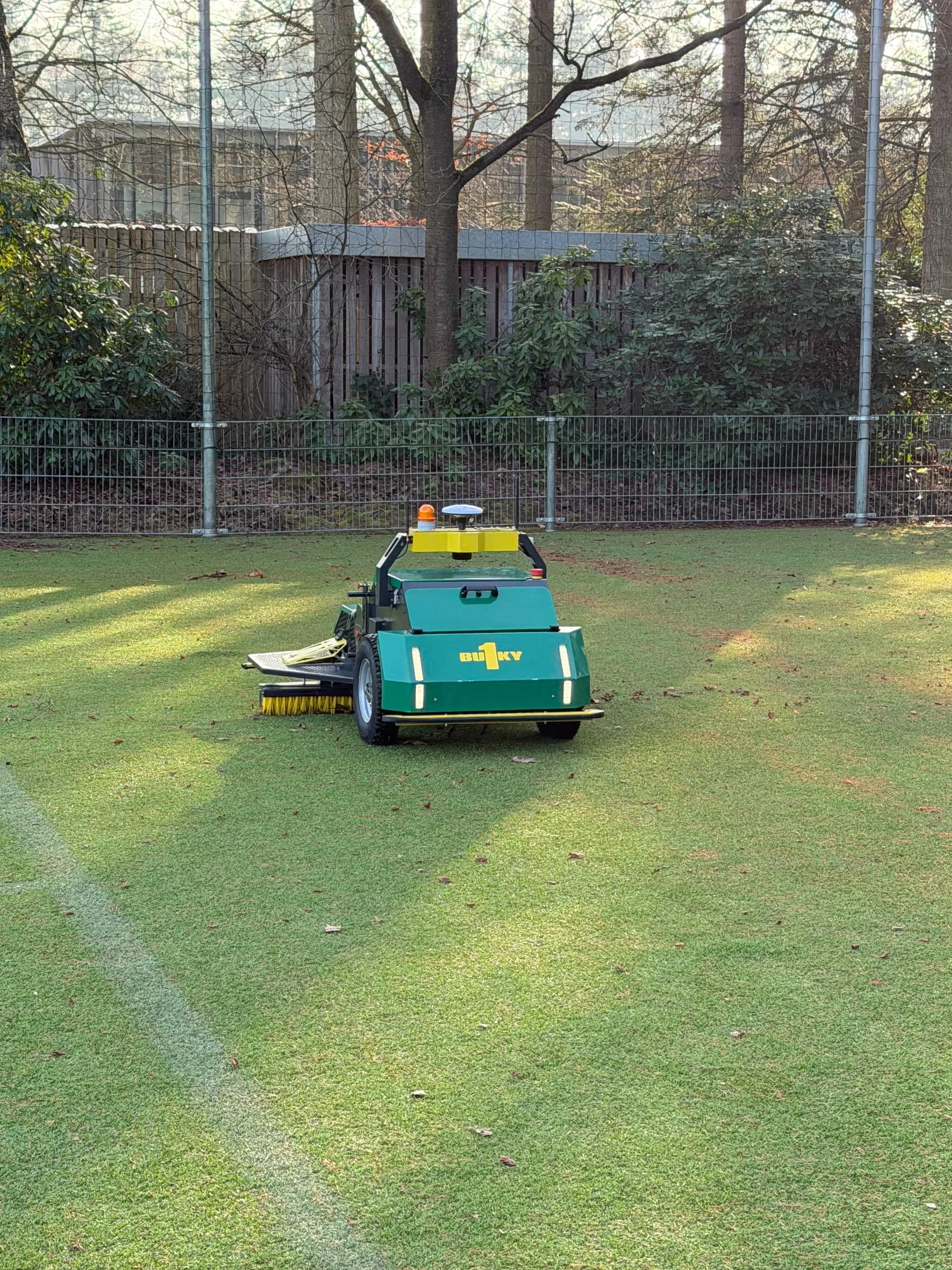
That leaves the question of time. Mowing and line marking take up a large share of a team’s hours, and they are repetitive tasks. Automating them does not remove work, it moves it: the hours freed go to the agronomic operations, the ones that need an eye, a decision and precise soil conditions.
"Real innovation is not running a machine all the time, it is being able to use it precisely when conditions are right," adds Léo Chouraqui. A robot does not excuse you from halting passes on waterlogged ground, or from raising the cutting height during water stress. It replaces neither aeration, nor decompaction, nor sanding: it frees the time to do them at the right moment.
Hexagone Sport Robotics is among the manufacturers interviewed by Terrains de sports magazine for its report on pitch maintenance in the face of climate change.
 Insight
The 2023 World Aquatics Championships, the Doha Worlds, the Paris 2024 Games — and, before them, Rio and London. What you learn cleaning pools under that kind of scrutiny.
 Insight
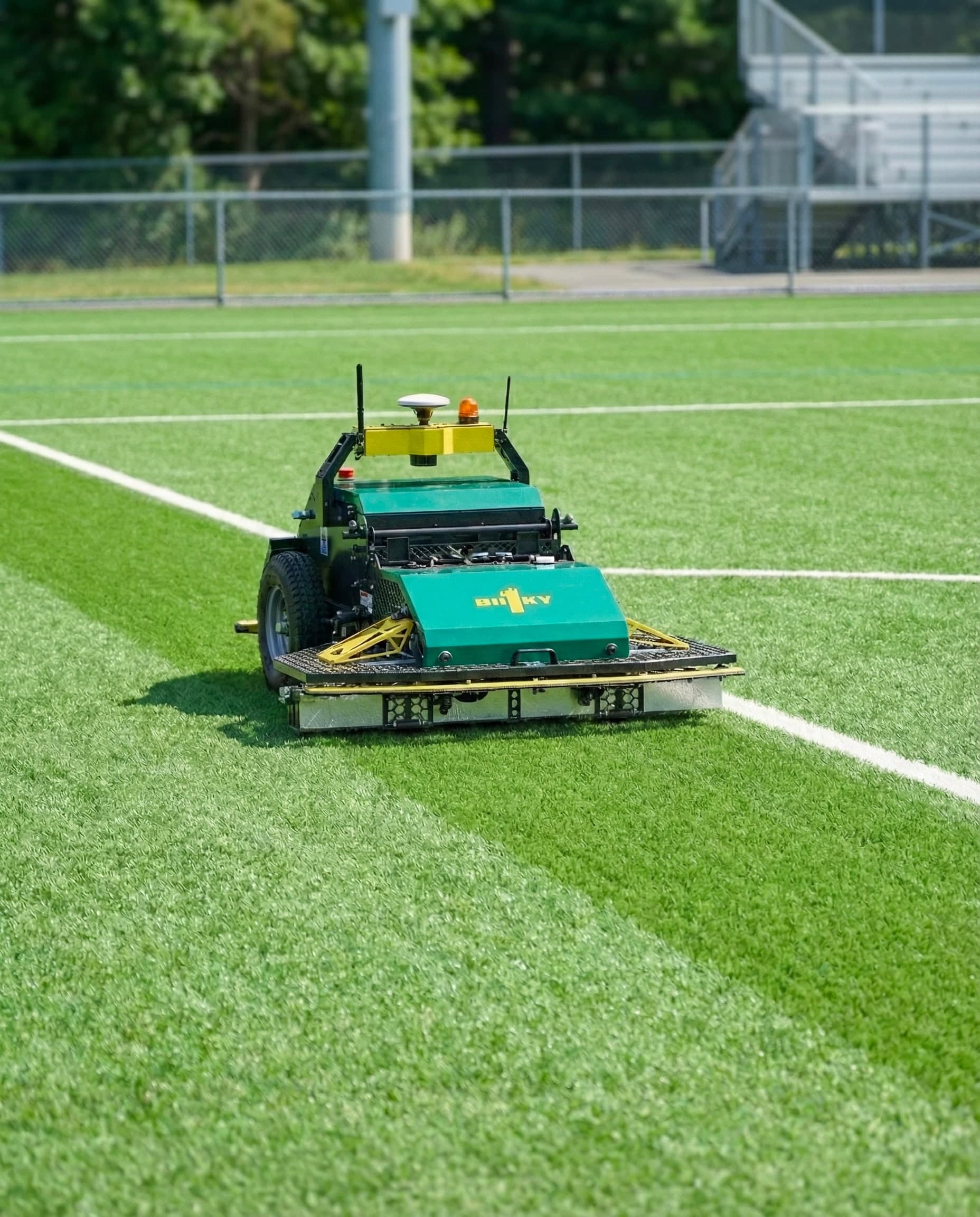
A Swedish life cycle assessment comes down in favour of artificial turf — on two conditions, one of which is about the maintenance machines themselves.
 Insight
Owner liability, manufacturer specifications, the end of SBR in 2031: what maintaining a synthetic pitch actually involves.